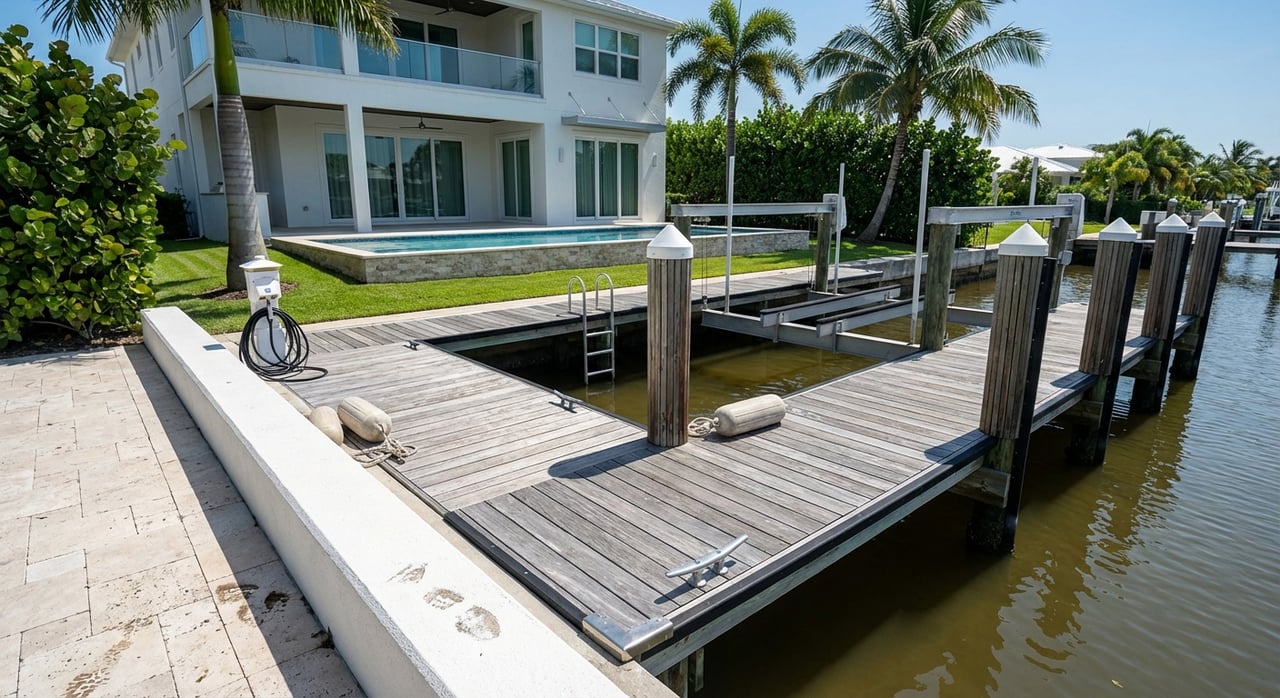
If you love being on the water, a dock home on Hypoluxo Island can deliver the lifestyle you want. The key is matching the property to your boat and the way you plan to use it. You want quick ocean access, reliable depth, and a setup that respects local rules and marine life. In this guide, you’ll learn how to evaluate depth, bridge clearances, dock types, wake exposure, and permits so you can buy with confidence. Let’s dive in.
Why Hypoluxo suits boaters
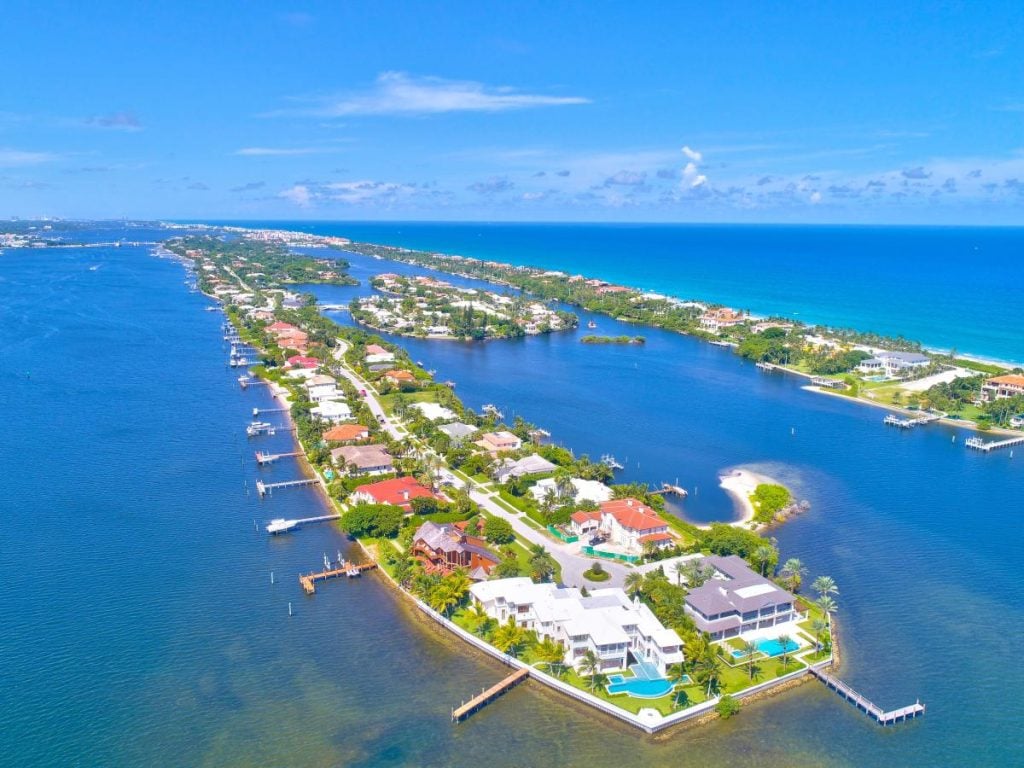
Hypoluxo Island sits on the Lake Worth Lagoon in the Intracoastal Waterway. Many homes promote direct Intracoastal frontage and short runs to the ocean via the Boynton Inlet. That proximity can cut your offshore transit time and exposure to open water.
You’ll also see listings that mention “no fixed bridges” and easy ocean access. Treat that as a starting point. For any property, confirm the exact route to the inlet and whether a fixed bridge or restricted opening stands between your dock and the ocean.
Depth comes first
Depth controls everything: whether you can leave at low tide, reach the marked channel, and run offshore without risk. Depth is referenced to Mean Lower Low Water (MLLW), so always ask for numbers tied to MLLW and check local tide data from NOAA’s stations for planning and daily variation. You can use the Port of Palm Beach station to see typical tidal range and timing in the area. Referencing the correct datum keeps everyone aligned on real clearance and water under the keel.
Regionally, the Lake Worth (Port of Palm Beach) Inlet and approach are maintained to commercial depths. Recent work has targeted the 33 to 39 foot range in the inlet and approach, which illustrates how deep-draft access depends on maintained channels. The Intracoastal Waterway segments nearby are planned to shallower pleasure-boat templates in many reaches, with projects referencing depths around minus 12 feet MLLW. Actual controlling depths vary by reach and maintenance cycles, so verify the latest figures with charts and notices.
For a specific property, insist on a recent professional soundings report showing depth at the seawall face at MLLW. Do not rely on spot checks at high tide. If the frontage sits on unmaintained shallow water, expect complex permits and higher costs for any private dredging. EPA marina siting guidance underscores evaluating natural depth, tidal range, and shoaling history before assuming dredging is feasible.
Quick depth checklist
- Ask for the property’s latest sonar/bathymetric report at MLLW.
- Confirm the controlling depth of the nearest marked channel and inlet, plus the most recent dredging date.
- Map the exact path from the dock to the channel and note any shallow bars or bends.
- If depth looks marginal, get a marine contractor to review feasibility before you write it into your plans.
Bridges and clearances
Most Hypoluxo routes to the ocean use Boynton Inlet or Lake Worth Inlet. These inlets are not constrained by low fixed vehicle bridges the way some interior canals are. Still, you should verify the route from your prospective dock to the inlet and confirm that no fixed bridge or restricted opening stands in your way.
If you plan to cruise the ICW north or south with a tall hardtop or mast, review closed clearances and opening schedules for bridges along your route. For example, the PGA Boulevard bridge lists a closed clearance around 24 feet and follows scheduled openings. Check current figures and VHF procedures before you go.
Bridge planning tips
- Identify every bridge between your dock and your destination and note the lowest point you must pass.
- Compare your air draft to the worst-case closed clearance at high tide.
- Keep VHF and phone contacts handy for scheduled openings.
Dock types and marina alternatives
Local setups range from simple marginal docks with lifts to full T or L piers, depending on width and channel alignment. For larger yachts or when private depth is marginal, a wet slip at a nearby full-service marina can be a smarter solution.
- Palm Beach Yacht Center in Hypoluxo/Lantana offers in-water slips, fuel, and haul-out. Review posted maximum LOA, beam, and depth at MLLW before you commit.
- Loggerhead’s South Lantana Marina provides club-style dockage close to Boynton Inlet, helpful for shorter offshore runs.
When comparing marinas, look at minimum berth depth at MLLW, maximum LOA and beam, shore power options, fuel availability, haul-out capacity, security, transient policies, and waitlists. Booking sites and marina pages typically publish these specs.
Wake and exposure
Lake Worth Lagoon is more sheltered than the ocean, but wake and wind-driven waves still matter. Properties near open lagoon stretches or close to inlets see more motion than sheltered coves or no-wake areas. EPA marina siting guidance recommends analyzing fetch, boat traffic, and flushing when placing docks, and those same principles help you judge day-to-day comfort at a home berth.
Manatee and seasonal speed zones can reduce wake in certain sections and also influence your transit time. The Florida Fish and Wildlife Commission publishes manatee protection maps and seasonal rules, which are helpful for understanding typical speeds and construction timing windows.
Exposure questions to ask
- Is the dock on a wide, busy stretch of the ICW or a protected cove?
- Are there posted idle or slow-speed zones nearby?
- How heavy is weekend traffic in season, and does it align with your preferred boating times?
Permits and timelines
New docks, expansions, lifts, and any dredging require multiple approvals. Expect federal review by the U.S. Army Corps of Engineers, state review by FDEP for sovereign submerged lands, and local permits for building and environmental rules. Regional guidance outlines acceptable dock forms, limits, and expectations for seagrass avoidance and mitigation.
Simple repairs within an existing permitted footprint usually move faster. New dredging or dock extensions can take months and may require mitigation if seagrass or manatee habitat is involved. Maintenance dredging in federal channels proceeds on USACE schedules, but private dredging is a separate process and often carries significant cost.
The smart buyer’s checklist
Use this during showings and due diligence with your agent and marine professionals.
- Site and access
- Map the exact route to Boynton or Lake Worth Inlet. Note any fixed bridges and the lowest clearance point.
- Estimate distance and time to the inlet and offshore grounds based on your boat’s speed and local speed zones.
- Depth and navigation
- Collect the latest soundings at the seawall at MLLW and the controlling depth of the adjacent channel.
- Ask for recent dredging history on the nearest channel or inlet.
- Structures and permits
- Request copies of all recorded dock and submerged-lands authorizations and any riparian agreements.
- Confirm the dock was built as permitted and that no violations are outstanding.
- Environmental constraints
- Identify any seagrass beds, mangroves, or manatee restrictions in front of the lot.
- If you plan a lift, get a permit-feasibility memo from a qualified marine contractor.
- Marina alternatives
- If private depth is marginal, compare local marina options for slip size, depth, services, and waitlists.
- Insurance and flood
- Pull the FEMA flood map panel and request the property’s Elevation Certificate. Confirm wind and flood insurability early.
Bottom line
On Hypoluxo Island, depth at MLLW and a clear, bridge-free route to the inlet are the big drivers of boating lifestyle. Maintained federal channels and well-equipped marinas can widen your options, while local environmental protections shape what you can build and when. With the right checks and expert guidance, you can secure a dock home that works for your boat on day one and protects your enjoyment long term.
If you want a private, waterfront-savvy partner to vet depth, routes, permits, and marina plans before you write an offer, we are here to help. Request a discreet consultation with The Jack Elkins Team and move forward with confidence.
FAQs
What depth do I need for my boat on Hypoluxo Island?
- Start with your boat’s draft, then add a safety margin based on MLLW; verify the property’s seawall depth at MLLW and the controlling depth of the nearest marked channel before committing.
How do I confirm “no fixed bridges” to the ocean?
- Trace the exact route from the dock to Boynton or Lake Worth Inlet on current charts and check bridge listings for closed clearances and opening schedules; verify with published sources and local notices.
Is Boynton Inlet the best exit for Hypoluxo homes?
- It is typically the closest for Hypoluxo properties, which can reduce transit time offshore; always confirm your specific route and conditions for your vessel.
What if my yacht’s draft is too deep for the property?
- Consider a nearby deep-water slip at a full-service marina and use the home dock for a tender or lift; compare marina LOA, beam, and depth limits before you decide.
How long do dock permits take in Palm Beach County?
- Simple repairs can move faster, but new docks, expansions, or dredging often take months due to multi-agency reviews and potential mitigation for seagrass and manatee protections.
Do manatee or speed zones affect my daily boating?
- Yes; idle or slow-speed zones reduce wake and can add transit time, so review posted maps and plan routes and schedules accordingly.