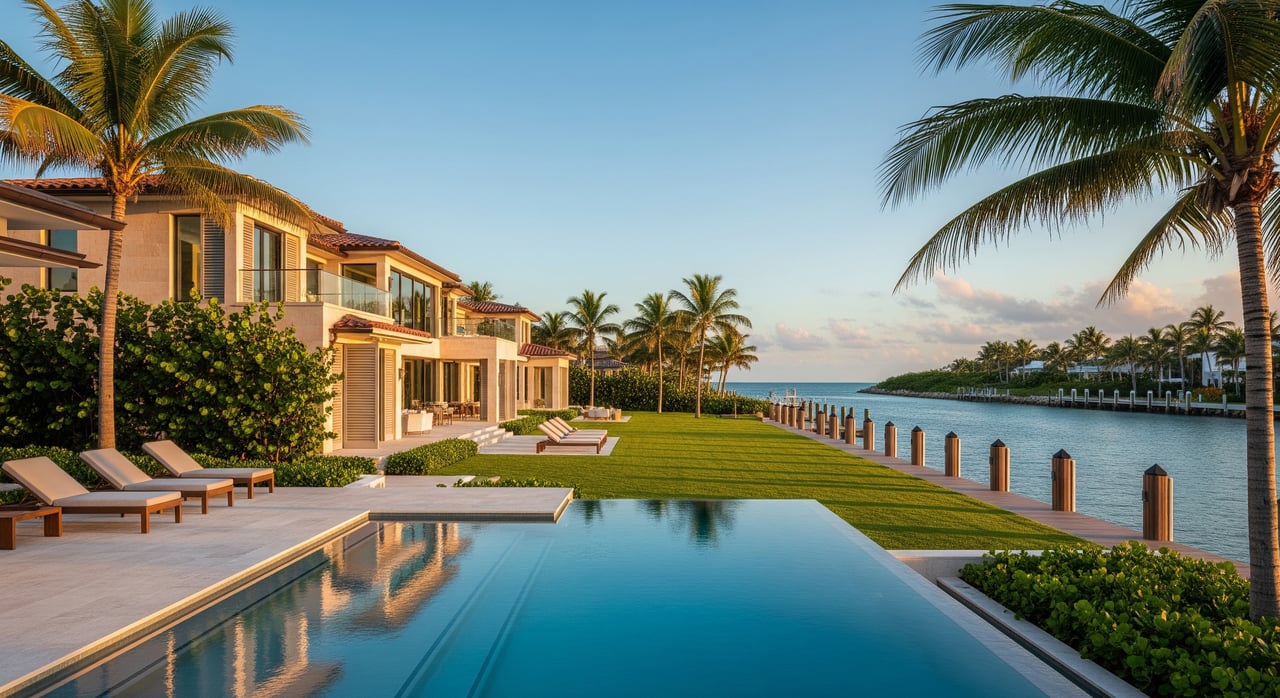
If you have spent time along the Palm Beach–Manalapan coastline, you know not all “waterfront” is created equal. In Manalapan, a property that touches both the Atlantic Ocean and the Intracoastal Waterway tells a different story of privacy, boating ease, and long-term desirability. You want clarity on how those lot types translate to price, demand, and daily life. This guide breaks down what dual-waterfront really means here, how it shapes value, and what to check before you buy or sell. Let’s dive in.
What “dual-waterfront” means here
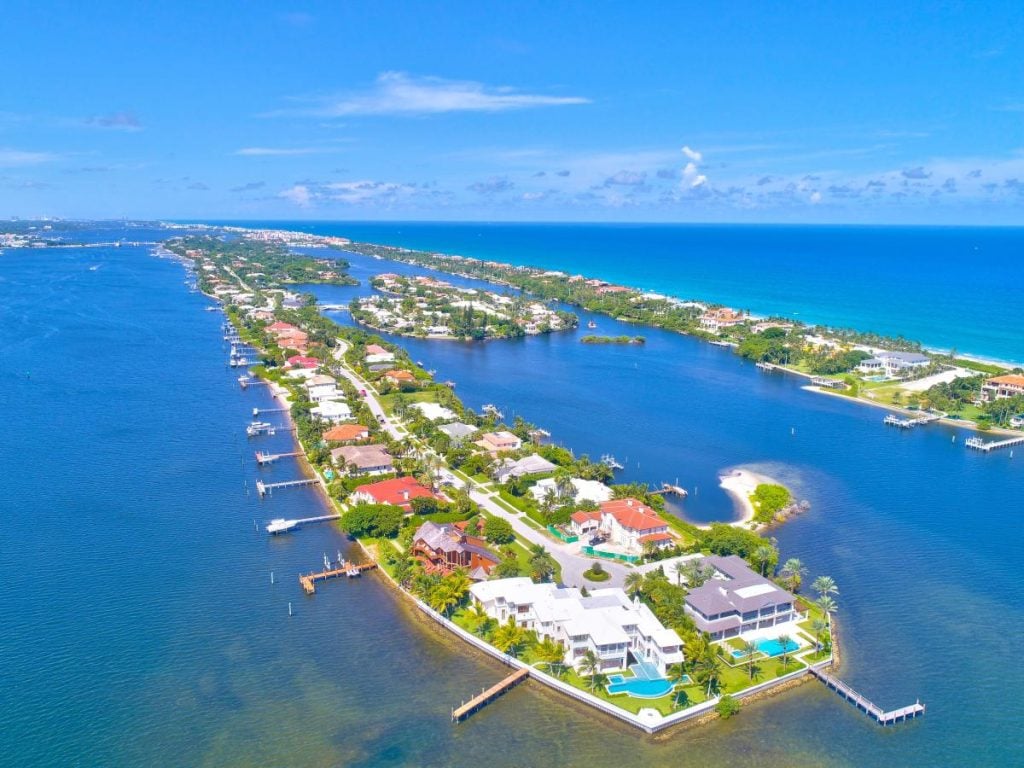
Manalapan sits on a narrow barrier island between the Atlantic Ocean and the Intracoastal Waterway, also called the Lake Worth Lagoon. Because land is limited, true ocean-to-Intracoastal parcels are rare and coveted. When you evaluate listings, you will see a few distinct waterfront types:
- Oceanfront: Direct Atlantic frontage with private beach and dune, plus unobstructed ocean views.
- Intracoastal frontage: Direct lagoon frontage, typically with a seawall and private dock for protected mooring.
- Ocean-to-Intracoastal through-lots: A single parcel spanning from ocean to Intracoastal, offering both private beach and a deepwater dock.
- Paired or proximate lots: Two adjacent parcels, one oceanfront and one Intracoastal, held together or linked by easement so they function like a through-lot.
- Canal or inlet-front: Waterfront on a canal or inlet connected to the Intracoastal. Access and depth vary by location.
Scarcity drives much of the appeal. With a small municipal footprint and limited new oceanfront creation, Manalapan’s dual-waterfront configurations sit at the top of the local hierarchy for buyers who want both beach and boating.
How lot traits shape price
Frontage and linear feet
Linear feet of true ocean frontage is one of the most influential lot metrics. The wider the ocean exposure, the stronger the view plane and beach access, which tends to command a premium. Intracoastal frontage matters too, especially when it supports a functional dock setup.
Depth, acreage, and site plan
Through-lots are naturally deeper and often larger, which allows for longer drives, meaningful privacy buffers, guest houses, and outdoor spaces on both sides. The ability to position the main residence for ocean views while placing a guest pavilion or gym by the dock increases daily utility and resale appeal.
Views and orientation
Unobstructed ocean views are a core value driver. On the Intracoastal, wide-water vistas and open view corridors enhance appeal. Orientation can also shape your routine, such as capturing sunrise over the ocean and soft evening light over the lagoon.
Dock specs and water depth
The dock’s permitted length, slip size, swing room, and depth at mean low tide directly affect boating capability. A dock that reliably accommodates a large yacht and offers a shorter run to the inlet will be more valuable than a similar-length frontage with shallow water or long travel times.
Protective features and access
Seawalls, bulkheads, dune width, and beach profile are practical considerations. Engineered seawalls and healthy dunes reduce risk and future retrofit costs. Also consider your route to open water, including fixed or low bridges and time under power to the Atlantic.
Improvements and infrastructure
Existing seawalls, permitted docks, utilities, and landscape infrastructure save time and capital. Buyers tend to pay more for immediate, functional benefits like a usable dock and turnkey beach access than for speculative future upgrades.
Ocean vs. Intracoastal vs. through-lot value
Oceanfront premium
Direct beach access and unobstructed ocean views are difficult to replicate, so oceanfront typically commands the highest per-foot pricing. The magnitude of the premium depends on frontage width, dune quality, and how well the residence takes advantage of the site.
Intracoastal premium
Protected, year-round docking carries its own premium, especially with deep water, generous slip size, and easy navigation to the inlet. Calm-water boating and secure mooring are key for marine-focused buyers.
Ocean-to-Intracoastal premium
A true through-lot combines top-value features on both sides into one estate. The price is not simply oceanfront plus Intracoastal; it is often higher because it eliminates the tradeoff between a private beach lifestyle and immediate yachting capability.
Key takeaway: Through-lots are uniquely valuable for buyers who want both surfing or beach days and quick, reliable yacht access.
Practical examples
- A permitted deepwater dock with large-vessel capacity and minimal transit to the inlet will outcompete a similar ICW lot with shallow water or bridge constraints.
- A through-lot that supports a main home on the ocean side and a guest house or wellness pavilion on the ICW side delivers flexible living and elevated resale potential.
Lifestyle differences that matter
Daily routine and flow
- Oceanfront mornings can mean sunrise beach walks and open-sky views from primary living spaces.
- Intracoastal afternoons often mean shaded pool terraces, calmer breezes, and launching a tender for a quick dinner cruise.
- Through-lots let you shift your day between beach and dock without compromise.
Privacy and hosting
Lot depth allows thoughtful separation between entertaining zones. You can host a waterfront dinner by the dock while keeping the ocean-side living areas peaceful, or welcome guests to a separate pavilion near the ICW without impacting the main residence.
Boating advantage
Protected, deepwater docking next to your property changes how you use a boat. It is simpler to get underway, manage provisioning, and maintain larger vessels when your slip sits just steps from home.
Market dynamics in Manalapan
Manalapan’s inventory is limited and skews to estate-scale properties. Scarcity helps support pricing resilience at the upper end. While the ultra-luxury market can move slower due to fewer qualified buyers, dual-waterfront properties tend to sell faster and closer to ask because they satisfy more needs in one purchase.
Buyers often compare Manalapan to nearby enclaves. Palm Beach offers a similar echelon of prestige with a denser, more urban fabric. Jupiter Island is equally exclusive yet different in feel and geography. Manalapan’s comparative advantage is the rarity of true ocean-to-Intracoastal configurations, along with larger lot privacy.
Financing, insurance, and appraisals
Appraisal approach
Appraisers and brokers typically adjust upward for true ocean frontage, private deepwater docking, and through-lot configurations. Price per ocean-front foot can be a shorthand, but for custom estates, acreage, improvements, and design can outweigh simple frontage math. The most reliable method is a segmented comp set by lot type and dock capability.
Insurance and carrying costs
Flood and wind insurance matter in your pro forma. Modern construction, engineered seawalls, and documented elevations can help manage wind and flood coverage. Lenders and insurers will look closely at dock permits, seawall condition, and flood zone status.
Lender scrutiny
Lenders often review dock permits, seawall inspections, and elevation certificates when underwriting high-value waterfront loans. Unresolved issues can limit financing options and narrow the buyer pool, which impacts marketability.
Due diligence checklist
Use this non-technical roadmap to protect your interests:
- Confirm the exact lot type and legal description with county records.
- Order a recent survey with lot lines, building envelopes, and existing setbacks.
- Verify dock and seawall permits, plus recent inspections. Consider a marine engineer’s assessment.
- Check depth at mean low tide, local tide tables, and any fixed bridge clearances to the inlet.
- Review FEMA flood zone designations and base flood elevation, and obtain an elevation certificate if available.
- Ask for erosion studies, dune restoration details, or any beach renourishment information relevant to the ocean side.
- Confirm utility service, including sewer versus septic and stormwater details.
- Review zoning and coastal construction rules with the Town of Manalapan to understand what you can build or improve.
- Request recent wind and flood insurance quotes to estimate ongoing carrying costs.
- Run a full title search for easements or covenants that may affect beach access, dock use, or redevelopment potential.
Smart seller moves that add appeal
- Document infrastructure: Provide dock permits, seawall reports, and elevation certificates to reduce buyer friction.
- Enhance function: Where permitted, improving a dock’s usability or confirming deepwater parameters can boost value and marketability.
- Show both sides: Stage and photograph the lifestyle on the ocean and Intracoastal sides so buyers feel the full utility of a through-lot.
- Prep comps: Work with a team that can segment comparables by lot type, dock specs, and inlet proximity for a pricing narrative buyers trust.
How to read Manalapan comps
- Segment by lot type first: oceanfront, Intracoastal, through-lot, canal or inlet-front, and paired parcels.
- Note ocean frontage width and line-of-sight quality from primary rooms.
- On the ICW side, track dock length, slip size, depth at low tide, and any bridge or turning constraints.
- Consider travel time to open water and the inlet route.
- Adjust for seawall age and condition, plus any documented engineering.
- For estates, weigh acreage, guest facilities, and design quality alongside price per foot.
Choosing the right fit for you
If your lifestyle is beach-first and boat-occasional, a wide oceanfront may satisfy you at a lower overall cost than a through-lot. If yachting, provisioning, and frequent outings are central to how you live, Intracoastal with robust dockage makes sense. If you want both with no tradeoffs, a true ocean-to-Intracoastal lot delivers the complete Manalapan experience and typically holds strong resale appeal due to rarity.
When you are ready to discuss a property’s specific attributes, a tailored analysis of lot type, dock capability, ocean frontage, and permitting history will give you a clear valuation range and a confident path forward.
To evaluate a listing or prepare your estate for market with discreet, waterfront-focused representation, connect with The Jack Elkins Team for a private consultation.
FAQs
What is a Manalapan ocean-to-Intracoastal through-lot?
- A single parcel that spans from the Atlantic to the Intracoastal, giving you both a private beach and protected deepwater dock access on one estate.
Do through-lots command a premium over single-frontage?
- Yes, they often do due to rarity and the combined amenities of private beach plus deepwater docking, though exact premiums should be derived from recent local closed sales.
How do dock specs and depth affect value here?
- Permitted length, slip size, swing room, and depth at low tide determine vessel capability and ease of use, which directly influence pricing and buyer demand.
Are dual-waterfront estates riskier to insure?
- Not inherently; risk depends on elevation, seawall condition, and build quality. Flood and wind coverage are manageable when construction meets modern codes and documentation is strong.
What due diligence is essential before an offer on a dual-waterfront lot?
- Verify permits and inspections for dock and seawall, confirm flood zone and elevation, check depth and bridge clearances, review surveys and title for easements, and analyze recent comps by lot type.
How do Manalapan dual-waterfront estates compare to Palm Beach?
- Both are top-tier markets; Palm Beach offers denser, amenity-rich living, while Manalapan stands out for larger estate privacy and the rarity of true ocean-to-Intracoastal parcels.