By the last Friday in July, the folding tables come down. The Hobe Sound Nature Center wraps its final guided walk of the season, the reservation calendar closes, and the meeting point at Jupiter Island Beach Road and A1A goes quiet again. Anyone watching from the outside would assume the show is over.
It isn't. Female loggerheads keep coming ashore on this stretch of sand for another three months, and almost nobody is there to see it.
The Season on the Calendar Versus the Season on the Sand
The Hobe Sound Nature Center's guided walks run Thursday and Friday evenings in June and July only, a scheduled, ticketed window where a naturalist gives a short talk in the museum at 8 p.m. before walking the group down to Hobe Sound Public Beach to watch a mother loggerhead dig her nest. Reservations open in the spring, spots fill fast, and the Hobe Sound Nature Center's own page sets a $25 donation as the going rate for that experience.
But the biology doesn't follow the reservation system. Females return to nest from February through October, and the Nathaniel P. Reed Hobe Sound National Wildlife Refuge is considered one of the most productive sea turtle nesting stretches in the Southeastern United States. That means the two ticketed months are a narrow slice in the middle of a nine-month event. August, September, and most of October carry on without a single scheduled walk, which is exactly when the beach belongs to whoever already knows how to read it.
| Guided Season (June–July) | Rest of Nesting Season (Aug–Oct) | |
|---|---|---|
| Format | Reserved, ticketed, narrated | Self-guided, unscripted |
| Group size | Limited by reservation | However many happen to be walking |
| Cost | $25 donation per person | Free |
| Who shows up | Visitors who booked ahead | Residents who already know the rules |
| What governs the beach | A naturalist's schedule | Federal refuge regulations, in effect regardless |
Why the Beach Still Requires a Red Light After the Tours Are Gone
The rules don't relax once the tours stop. A posted notice for a preserve photography session at Blowing Rocks makes the point directly: only lights with red filters or bulbs are allowed on the beach through October 31, because nesting season is still active. Flashlights, phone screens, headlights on North Beach Road, all of it has the same effect on a nesting or hatching turtle whether or not a naturalist is standing nearby to explain why it matters.
The refuge enforces its own quieter logic year-round. Dogs aren't permitted on the Refuge Beach at the north end of Jupiter Island, full stop, though leashed dogs are fine on the trails around the visitor center. The self-guided nature trail out front, a half-mile loop of sand and dirt through pine scrub and hardwood hammock, stays open every day the refuge is open, tour schedule or not. So does the 2.5-mile beach trail that runs north from the refuge parking lot toward Peck Lake, one of the few uninterrupted walking stretches left on this part of the coast.
None of this is seasonal decoration. It's the same set of federal protections that made the island what it is, and August is when you notice them without a crowd standing on top of you.
The 73 Acres That Became Blowing Rocks Preserve
The reason any of this land is still open at all traces back to a single year. In 1969, developers petitioned the Town of Jupiter Island to rezone a stretch of scenic limestone shoreline for high-density apartments or a hotel. Residents pushed back, the application was denied, and the developers agreed to sell the land instead. Residents then donated it, 73 acres in total, to The Nature Conservancy, creating Blowing Rocks Preserve.
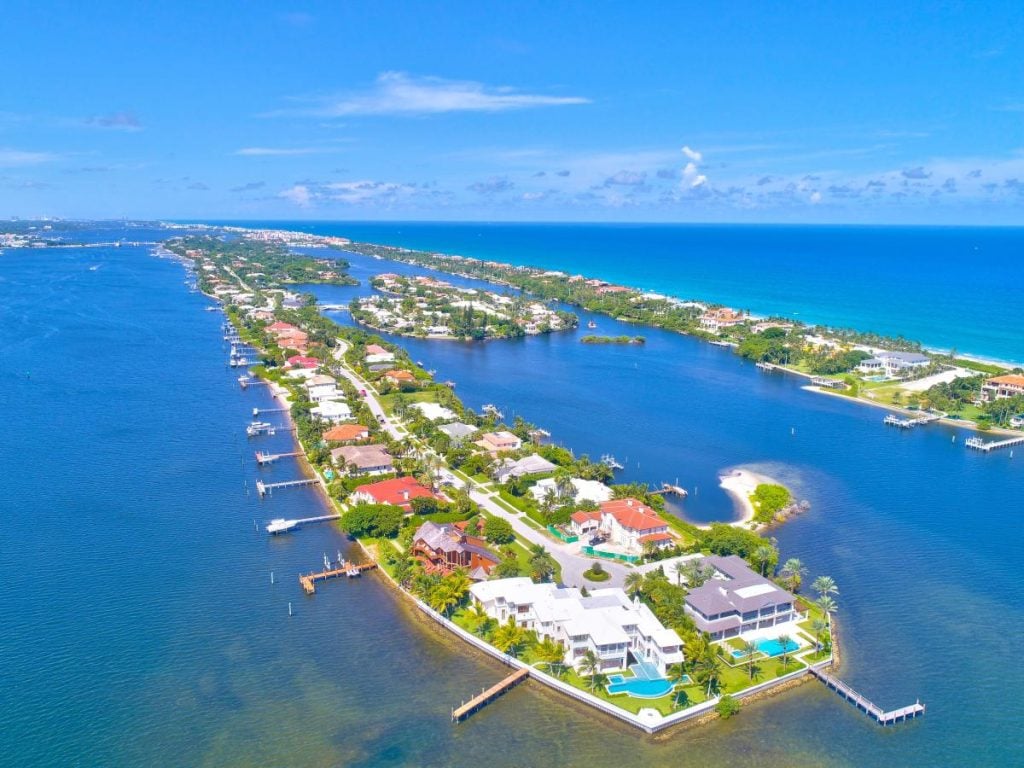
That same year, the Reed family and other residents donated more than a thousand acres to the U.S. Fish and Wildlife Service, splitting into the barrier-island beach tract on Jupiter Island and a 300-acre scrub tract on the mainland that became the Hobe Sound refuge. Two separate development plans, blocked by the same community, in the same twelve months. It's not a stretch to say the character of Jupiter Island today, low, quiet, largely undeveloped along its ocean edge, was decided by residents in 1969 rather than by zoning that came later.
The rock formation that gives the preserve its name is its own kind of local trivia. Preserve manager Cristin Krasco, who has worked there over a decade, describes it as "the longest continuous exposed outcropping of that ledge" on the Atlantic coast, an Anastasia limestone shelf that pushes seawater into visible plumes at high tide. It's most dramatic in winter, when seas run rough. In August, with calmer water, it's a quieter walk, better suited to the Dune Trail's sweeping view north than to chasing a splash.
Where Residents Actually Eat Once the Day-Trip Crowds Thin Out
The restaurant scene in Hobe Sound doesn't shut down when the tour buses stop coming, it just changes hands. Sophia's and Citron Bistro keep their regular tables filled with people who live here, not people passing through on a turtle-walk night. Salty Pelican Fish Shack and Palm & Ivy hold onto the same crowd through the slower months. Little Moir's Food Shack, the long-running local institution a few minutes off the island, doesn't need a nesting season calendar to stay busy.
That's the practical shape of an in-between month here. Fewer reservations required, fewer strangers on the beach after dark, and a dinner table that's easier to get on a Tuesday than it was in March.
The Trade Only Residents Notice
The guided version of turtle season is built for someone visiting for a week who wants a narrated, reserved encounter with a wild animal. The unguided version, the one running right now, is built for someone who already knows where Hobe Sound Public Beach is, already owns a red flashlight filter, and doesn't need a naturalist to explain why the lights stay off.
That's the actual trade this month offers. The same protected 3.5-mile stretch of nesting beach, the same limestone ledge at Blowing Rocks, the same federal rules that have applied since 1969, minus the crowd that only shows up when there's a ticket to buy. What changes in August isn't the island. It's who's paying attention to it.
If this is the kind of place you're already watching closely, whether from a porch on the island or from somewhere else entirely, The Jack Elkins Team knows this coastline the way its residents do. Request a private consultation whenever you're ready to talk about what a life here actually looks like, turtle season and all.
This article is general information, not legal, tax or financial advice. Consult a qualified professional about your situation.