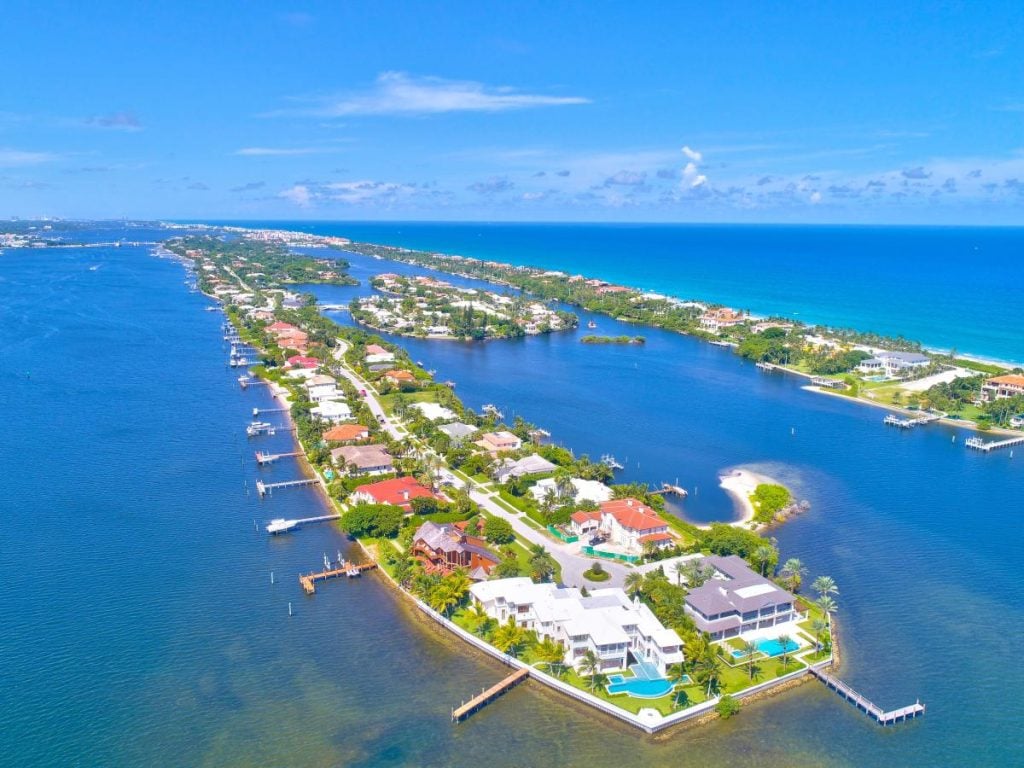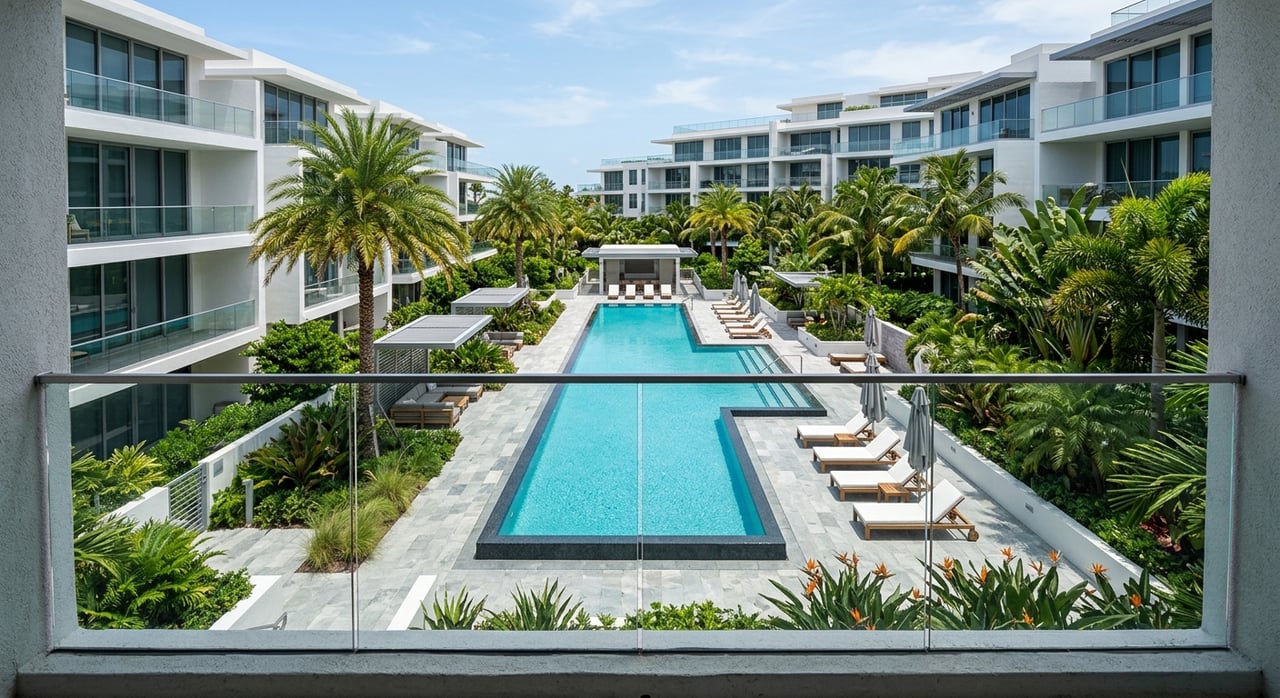
Choosing between a waterfront condo and a waterfront estate in West Palm Beach is not just about price or square footage. It is really a question of how you want to live, how much upkeep you want to manage, and how you want to use the water. If you are weighing privacy, boating access, insurance exposure, and lock-and-leave convenience, this comparison can help you focus on what matters most. Let’s dive in.
West Palm Beach Waterfront Living Basics
West Palm Beach is a city where the waterfront is part of daily life, not just a view. The downtown waterfront connects to the Intracoastal, and public spaces like Waterfront Commons and Lake Pavilion reinforce that shared, walkable waterfront character.
That local setup matters when you compare condos and estates. In this market, the decision often comes down to shared convenience versus private control, with flood exposure, carrying costs, and access to boating shaping the choice.
Condos vs Estates at a Glance
A waterfront condo and a waterfront estate can both deliver a strong lifestyle, but they do it in very different ways. One centers on shared services and simpler day-to-day management. The other centers on space, privacy, and direct control over the property.
| Factor | Waterfront Condo | Waterfront Estate |
|---|---|---|
| Ownership model | Shared-service association structure | Direct ownership and direct oversight |
| Maintenance | Common elements maintained by association | Owner manages and funds upkeep directly |
| Lifestyle | Often easier for seasonal or lock-and-leave use | Often better for buyers seeking privacy and lot control |
| Costs | Regular assessments plus possible changes tied to reserves, insurance, or repairs | More individual line-item costs for maintenance, insurance, and property care |
| Waterfront experience | Often tied to building amenities and shared access patterns | Often tied to private outdoor space and more direct control |
Condo Ownership in West Palm Beach
Shared maintenance and services
In a condo, you own your unit while the association maintains common elements. Under Florida law, the association is responsible for maintaining common elements and has the authority to collect assessments and handle repair and replacement of association property.
For many buyers, this is the main appeal. If you want a residence that feels more turnkey, especially for seasonal use, a condo can reduce the number of day-to-day property decisions landing on your desk.
What shared governance means for you
That convenience comes with a tradeoff. Decisions about common elements, repairs, and major changes are not entirely individual choices.
Florida law also outlines how major alterations to common elements are handled. If the governing declaration is silent, 75% of the voting interests generally must approve those changes.
Condo safety rules now matter more
In Florida, condo safety rules have become a major part of ownership. Residential condominium associations for buildings that are three habitable stories or higher must complete structural integrity reserve studies at least every 10 years.
These studies include key structural items such as the roof and structural components. Milestone inspections also apply to qualifying buildings, and current sale contracts must disclose when required inspection or reserve work has not been completed.
Estate Ownership in West Palm Beach
More control and more responsibility
A waterfront estate is a different ownership experience. Even if the property sits in an HOA, it is not governed by the same condominium statutes that define condo ownership.
In practical terms, that usually means you have more direct control over the property and more direct responsibility for upkeep. If you value privacy, lot control, and authority over your outdoor environment, that can be a meaningful advantage.
A more hands-on property model
With an estate, maintenance is not bundled into a shared-service framework. You are typically managing the property more directly, from routine upkeep to larger repairs and waterfront-related maintenance.
For some buyers, that is a positive. For others, especially those who want a lock-and-leave lifestyle, it can feel like more ownership friction than they want.
Comparing Carrying Costs
Homestead and tax treatment
If the property will be your permanent residence, it may qualify for the Palm Beach County homestead exemption. The county notes that the Save Our Homes cap of 3% applies to homestead-exempt property.
For non-homestead properties such as second homes, vacation homes, rentals, and vacant land, the county applies a 10% cap. The county also notes that taxes can still move more than 10% because millage rates and non-ad valorem assessments can change, and non-homestead property is reassessed at full market value in the year after a sale.
Condo costs can change quickly
A condo may look simpler on paper because some expenses are bundled into assessments. Still, those costs can move quickly when reserves, insurance, or repair needs shift.
Florida law requires association property insurance and treats deductibles and excess losses as common expenses. For budgets adopted on or after December 31, 2024, reserve funds for required structural components cannot be used for unrelated purposes.
Assessments deserve close review
Association assessments can also be enforced as liens. That is one reason buyers often review a building’s budget, reserve study, and recent assessment history carefully before closing.
This is especially important on the waterfront, where insurance and repair costs can be more dynamic. A lower-maintenance ownership model does not always mean lower long-term carrying costs.
Flood and Insurance Considerations
Waterfront risk is part of the math
In West Palm Beach, flood and wind costs are central to any waterfront purchase. Flood insurance is separate from standard homeowners insurance, and NFIP policies cover building and contents.
The city reports a CRS Class 5 rating, which it says equates to a 25% discount on NFIP policies issued in the city. That can be a meaningful factor when you compare one waterfront property to another.
Parcel-level research matters
West Palm Beach provides parcel-level flood information through its Forerunner tool. Buyers can review base flood elevation, design flood elevation, FEMA map links, and related flood data tied to a specific parcel.
Whether you are looking at a condo or an estate, this should be part of your early due diligence. Two properties with similar views can have very different flood profiles and insurance implications.
Boating Access and Waterfront Use
Shared public waterfront shapes the lifestyle
West Palm Beach’s waterfront character is not purely private. The downtown waterfront offers access to the Intracoastal Waterway, and the city says its docks are first-come, first-served and free for non-commercial boats.
That civic waterfront access adds another layer to the condo-versus-estate decision. For some owners, public access and shared amenities support the lifestyle they want without the need for private dock infrastructure.
Access details should never be assumed
For both condos and estates, boating access needs a closer look. You will want to confirm whether access is public, deeded, leased, or unavailable.
You should also account for current local conditions. For example, the city notes that Currie Park boat docks are closed for redevelopment and expected to reopen in Spring 2027.
Which Option Fits Your Lifestyle?
A condo may fit you best if
A waterfront condo may be the better fit if you want:
- A more lock-and-leave ownership experience
- Shared maintenance of common elements
- Amenities and services bundled into the ownership model
- A seasonal residence with fewer day-to-day property demands
An estate may fit you best if
A waterfront estate may be the stronger fit if you want:
- More privacy and more direct control
- Greater authority over the lot and outdoor environment
- A more personal approach to property decisions and upkeep
- A waterfront home where the setting feels distinctly your own
Questions to Ask Before You Buy
The best waterfront purchases usually come down to asking sharper questions early. In West Palm Beach, that means looking beyond the photos and into the operating realities of the property.
Here are a few smart questions to raise:
- If you are buying a condo, is the building current on milestone inspection and structural integrity reserve study requirements?
- Were any required inspection or reserve disclosures provided in the sale contract?
- Will the property qualify for homestead status, or will it be treated as non-homestead?
- What flood zone, base flood elevation, and design flood elevation apply to the parcel?
- What does the association insure, and how much risk could return to owners through deductibles, reserves, or assessments?
- Is boating access public, deeded, leased, or not included?
In the end, the right choice is usually the one that aligns with how you actually plan to use the property. A condo can simplify waterfront ownership. An estate can deliver a more private and controlled experience. In West Palm Beach, the smartest comparison is not just condo versus house, but convenience versus control, shared costs versus direct costs, and public waterfront access versus private-use priorities.
If you are weighing waterfront condos, estates, or private off-market opportunities in the Palm Beach area, The Jack Elkins Team offers discreet, concierge-level guidance shaped by local waterfront knowledge.
FAQs
What is the main difference between a West Palm Beach waterfront condo and estate?
- A waterfront condo is built around shared maintenance and association governance, while a waterfront estate typically offers more direct owner control along with more direct responsibility for upkeep.
How do condo costs work for West Palm Beach waterfront properties?
- Condo costs often include regular assessments, and those costs can rise when reserves, insurance, deductibles, or repair needs change.
How do Palm Beach County homestead rules affect waterfront ownership?
- If the property is your permanent residence, it may qualify for homestead exemption and the 3% Save Our Homes cap, while non-homestead properties are generally subject to a 10% cap.
What flood information should buyers check for West Palm Beach waterfront homes?
- Buyers should review parcel-level flood data such as flood zone, base flood elevation, design flood elevation, and related city mapping tools before moving forward.
What condo documents matter most in a West Palm Beach purchase?
- Buyers should closely review the budget, reserve study, assessment history, insurance details, and any disclosures related to milestone inspections or structural integrity reserve studies.
What should buyers know about boating access in West Palm Beach?
- Buyers should confirm whether access is public, deeded, leased, or unavailable, and they should also check whether current dock closures or redevelopment plans affect expected use.